Calcined petroleum coke is a high-purity carbon material produced by calcining raw petroleum coke at temperatures above 1200°C. It features high carbon content, low impurities, and excellent electrical and thermal conductivity. It is primarily used in prebaked anodes for aluminum electrolysis, carburizers for steelmaking, graphite electrodes, and anode materials for lithium-ion batteries, making it an indispensable key raw material in the metallurgy, new energy, and carbon industries.
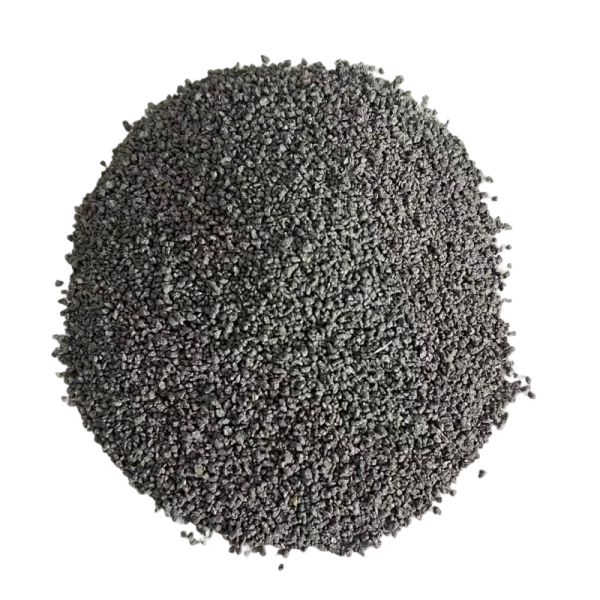
Calcined Petroleum Coke (CPC) Specifications
| Index | Fixed Carbon:%min
| Sulfur:% | Ash:%max
| Volatiles:%
| Moisture:%max | size |
| 1 | 98.7
| 0.3 | 0.8
| 0.5 | 0.5 | 0-1mm,0-2mm, 1-3mm,1-5mm; or Customization
|
| 2 | 98.4 | 0.5 | 1 | 0.6
| 0.5 |
| 3 | 98.0 | 0.7 | 1
| 1 | 0.5 |
The above specifications can all be customized according to customer requirements.
Calcined Petroleum Coke (referred to as CPC) is a high-purity carbon material produced by calcining raw petroleum coke, a byproduct of crude oil refining, at high temperatures ranging from 1200 to 1350°C. The calcination process effectively removes moisture and volatile matter from the raw material, reduces impurities such as sulfur and nitrogen, and significantly enhances fixed carbon content, true density, mechanical strength, electrical conductivity, and chemical stability.
It appears as a black, porous solid with a metallic luster. CPC typically has a fixed carbon content of ≥98% and is characterized by low impurities, high strength, good electrical conductivity, and strong oxidation resistance, making it an indispensable fundamental carbon raw material in modern industry. It is classified by quality into low-sulfur, medium-sulfur, and high-sulfur coke. Low-sulfur, high-density calcined coke is primarily used in high-end applications, while high-sulfur coke is mainly used in general metallurgy and industrial production.
Its main applications include serving as the core raw material for prebaked anodes in aluminum electrolysis, as a carburizer in steelmaking, and in the production of carbon products such as graphite electrodes, carbon blocks, and carbon paste. Additionally, high-quality calcined coke is an important raw material for anode materials in lithium-ion batteries. It is widely used in industries including metallurgy, chemicals, new energy, refractories, and the smelting of industrial silicon and ferroalloys.